


Kakimori Pigment Fountain Pen Ink - Suitable for FP and Dip Pens
Description
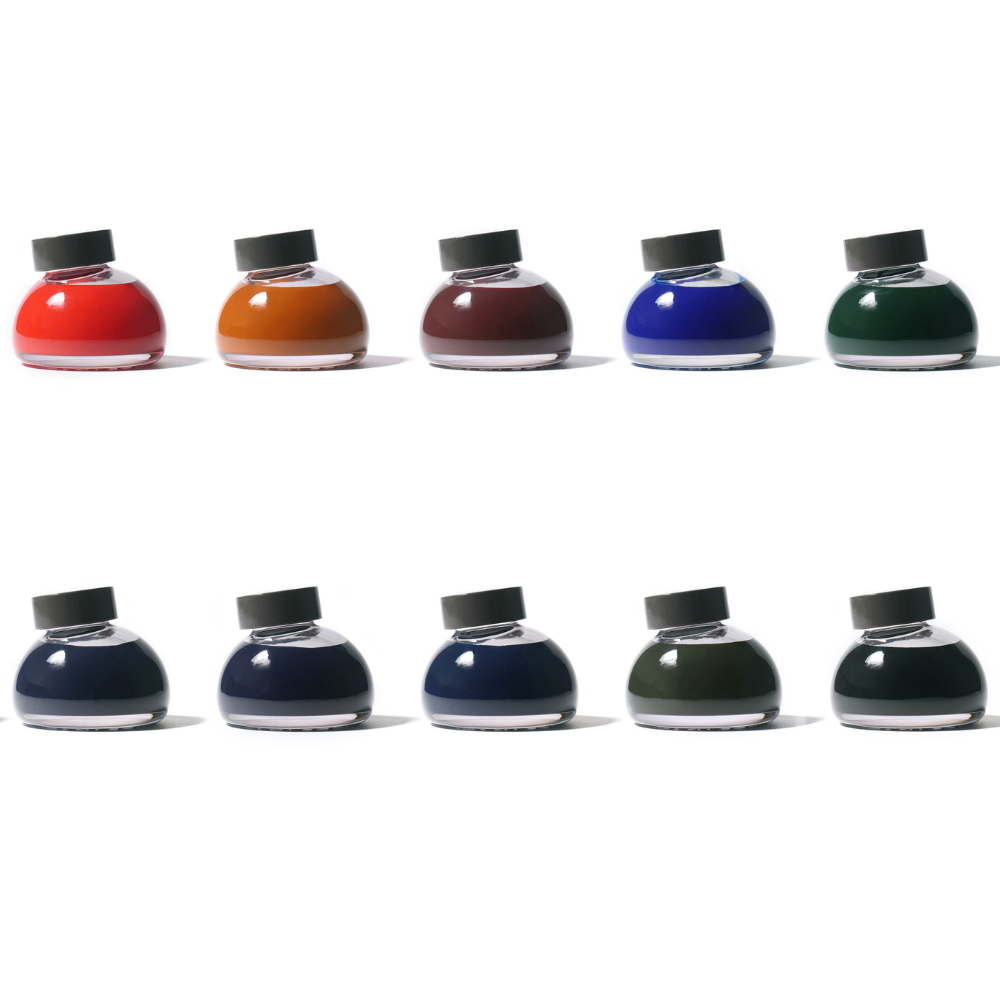
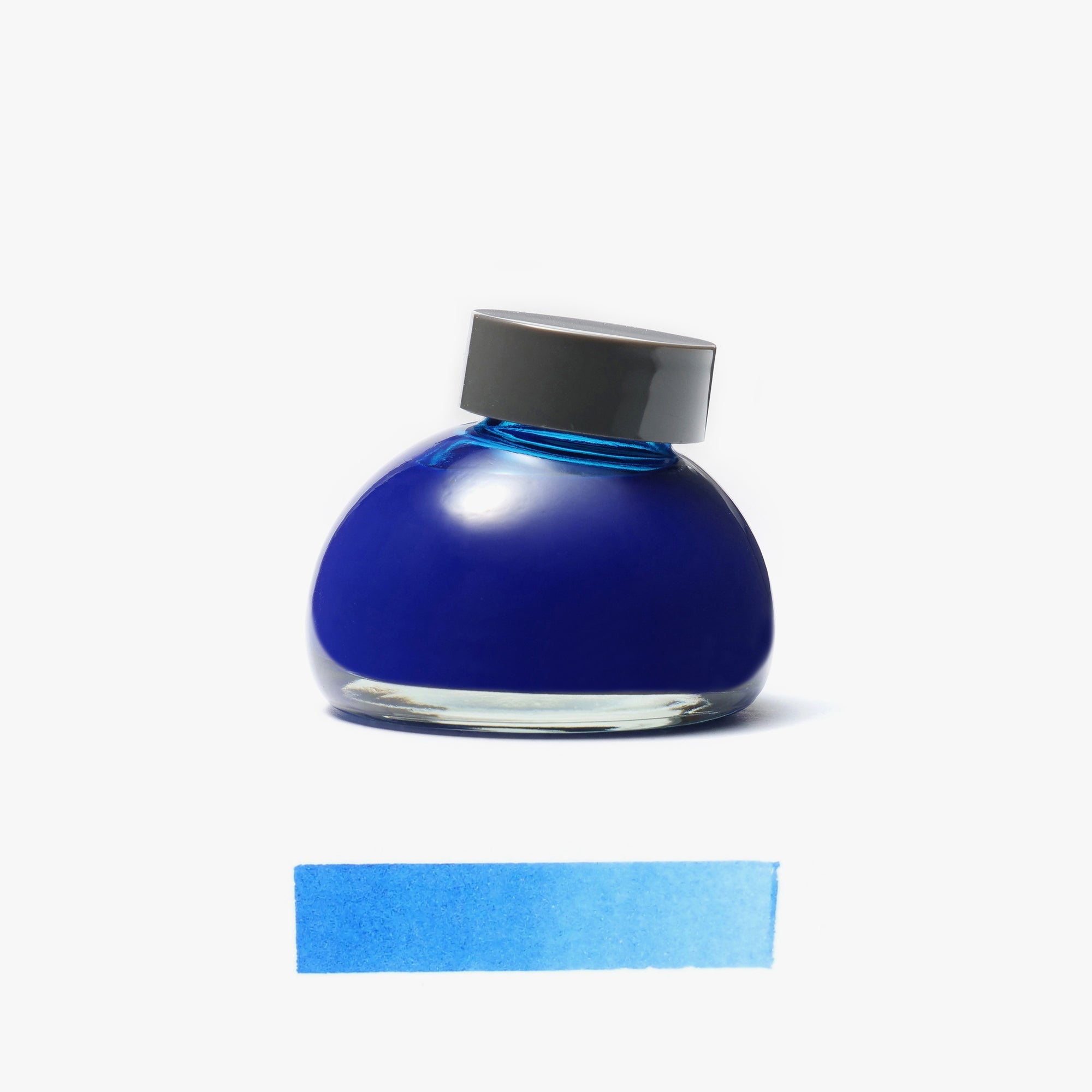
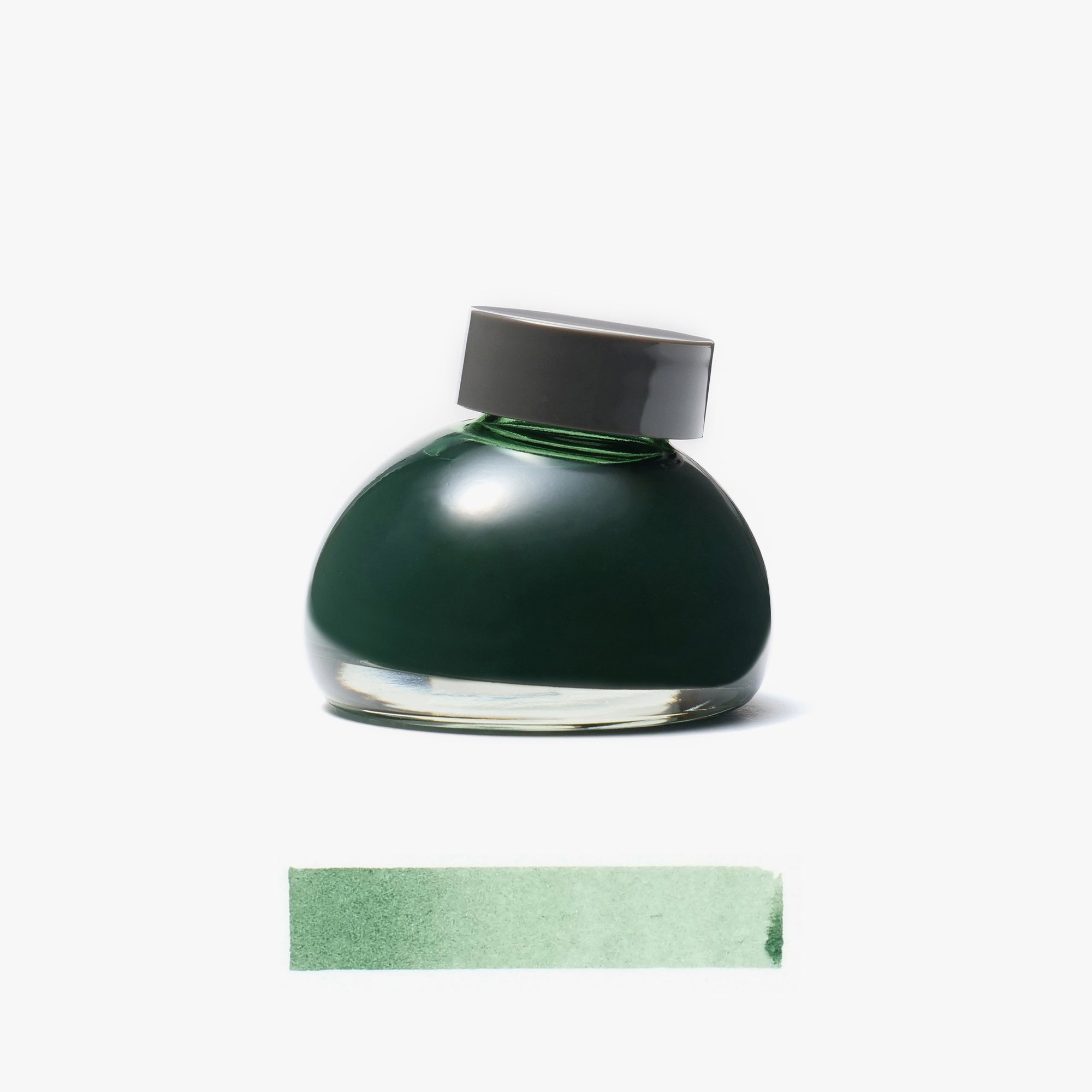
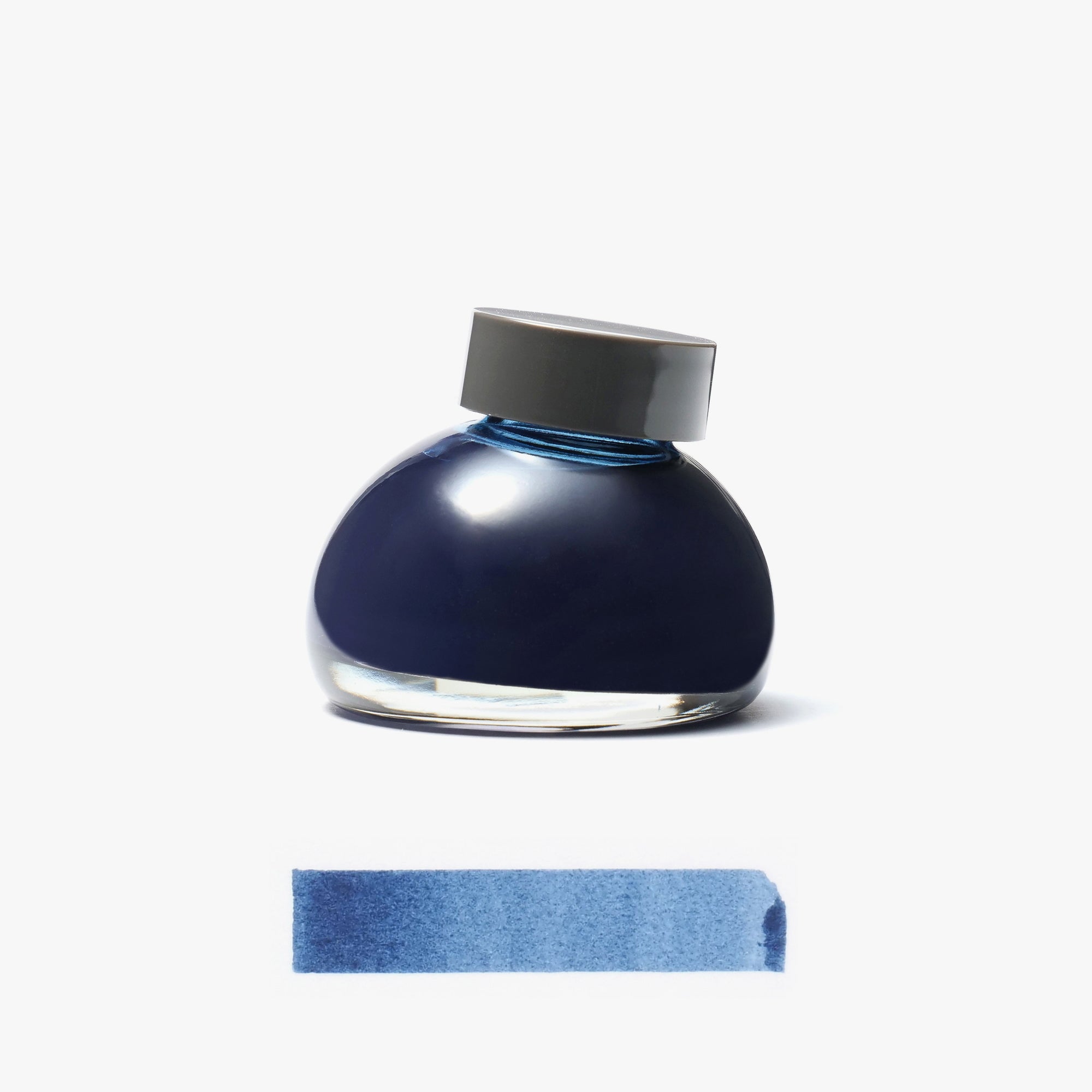
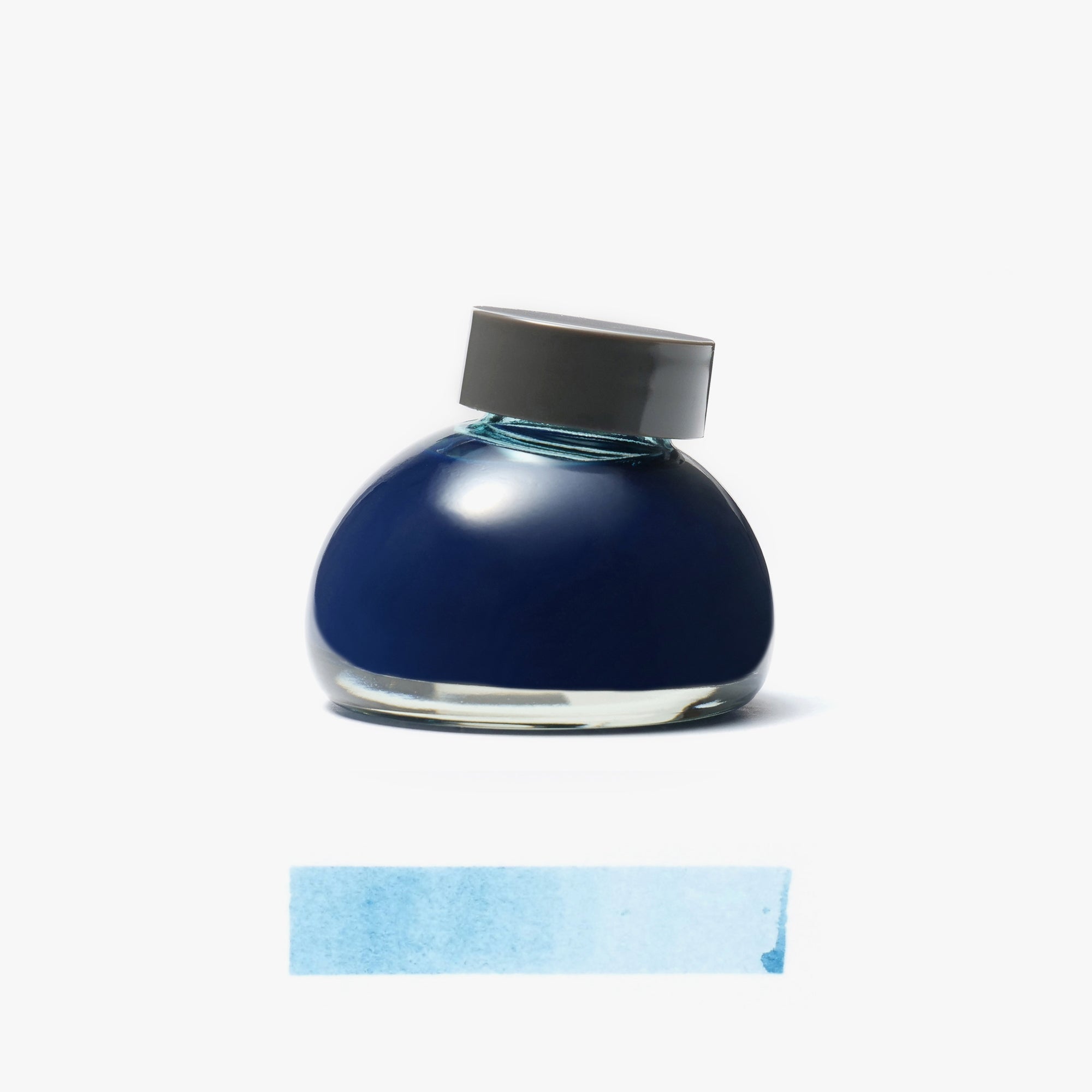
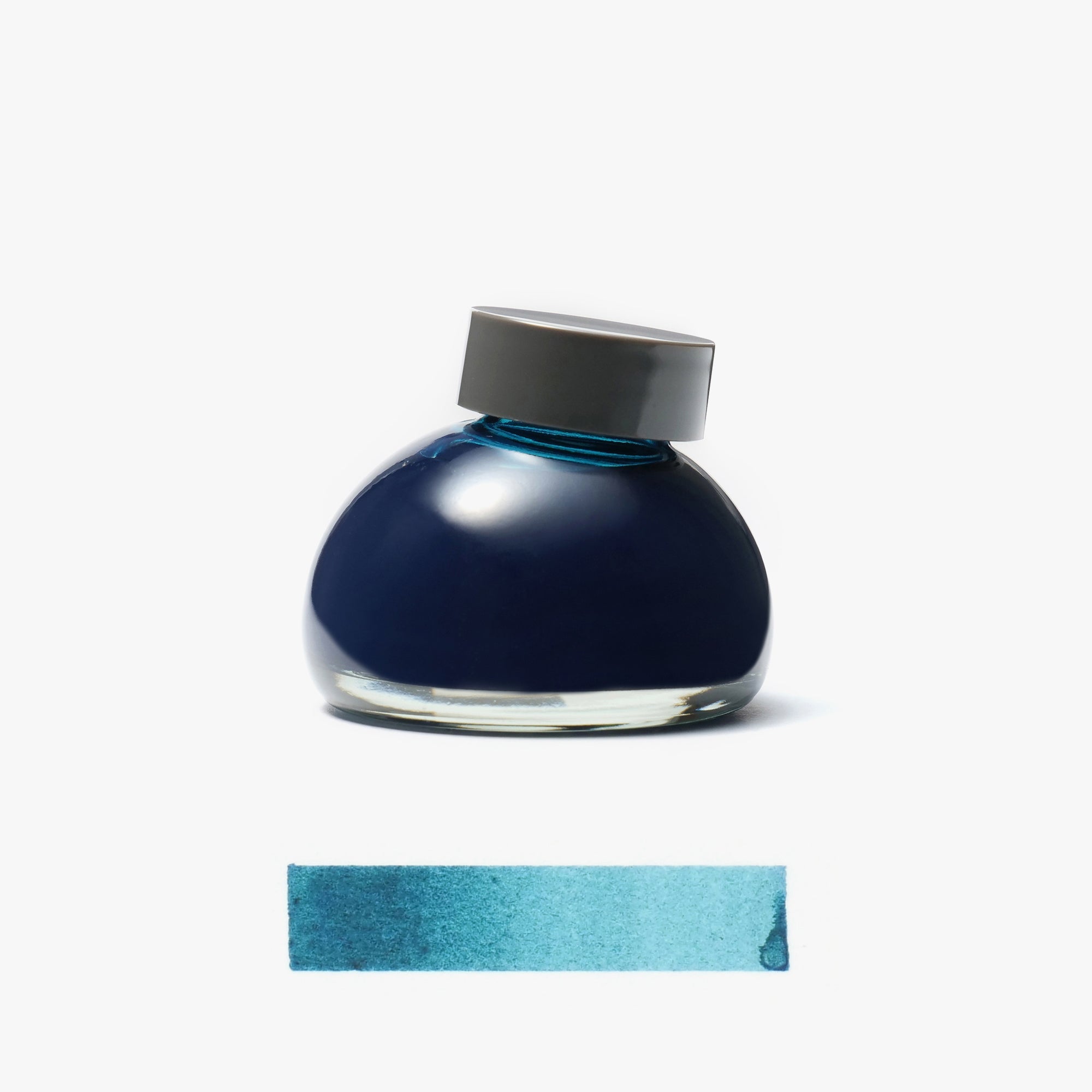
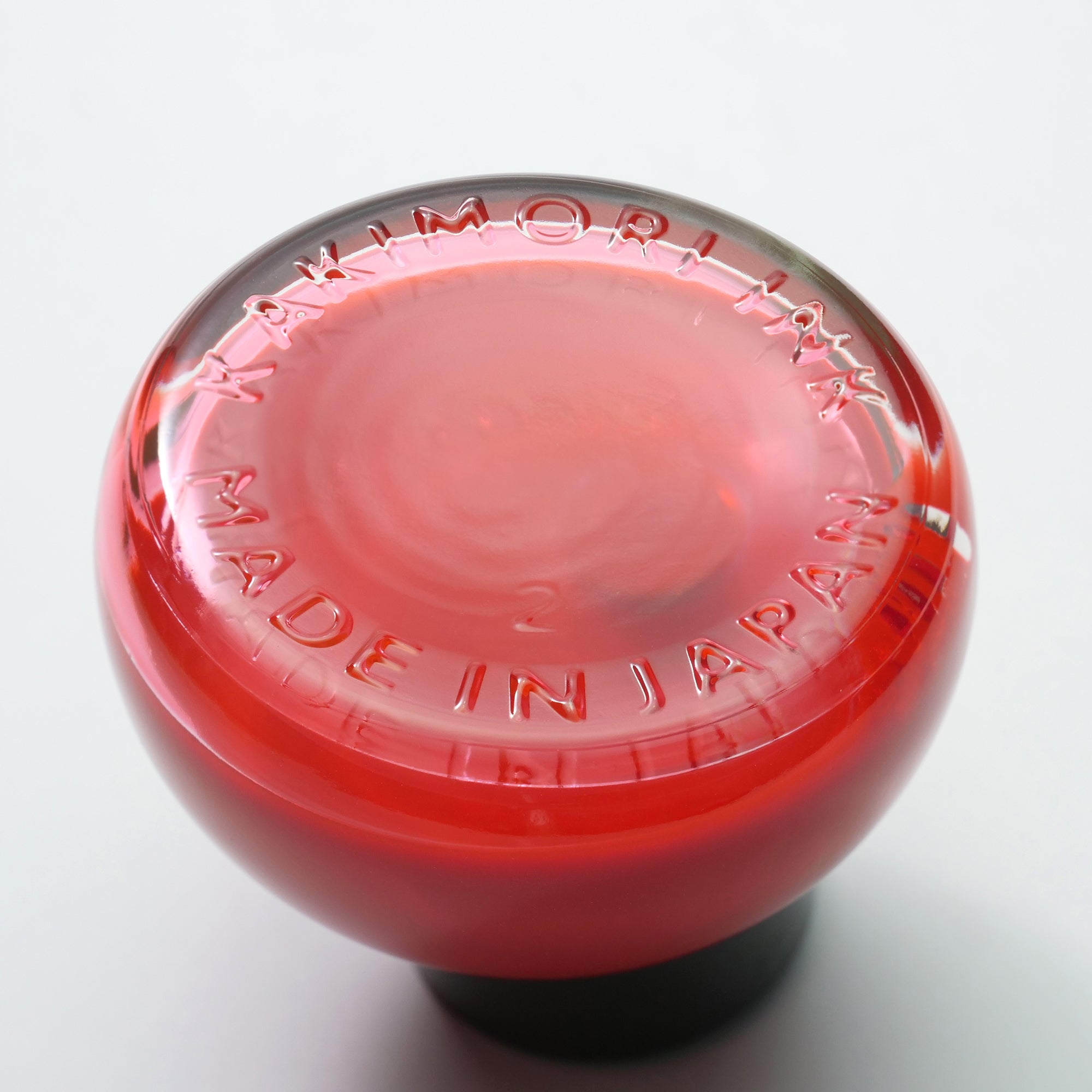
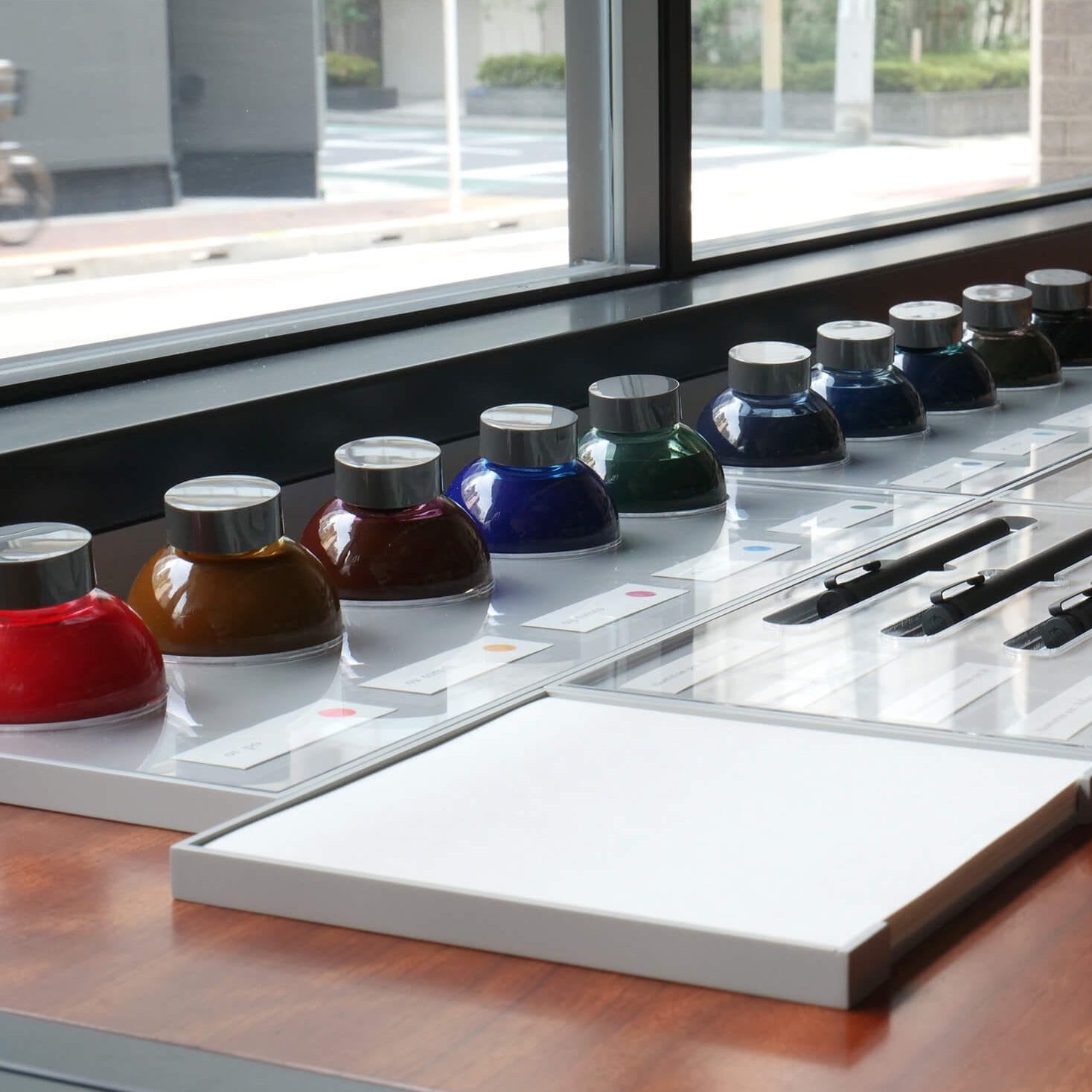
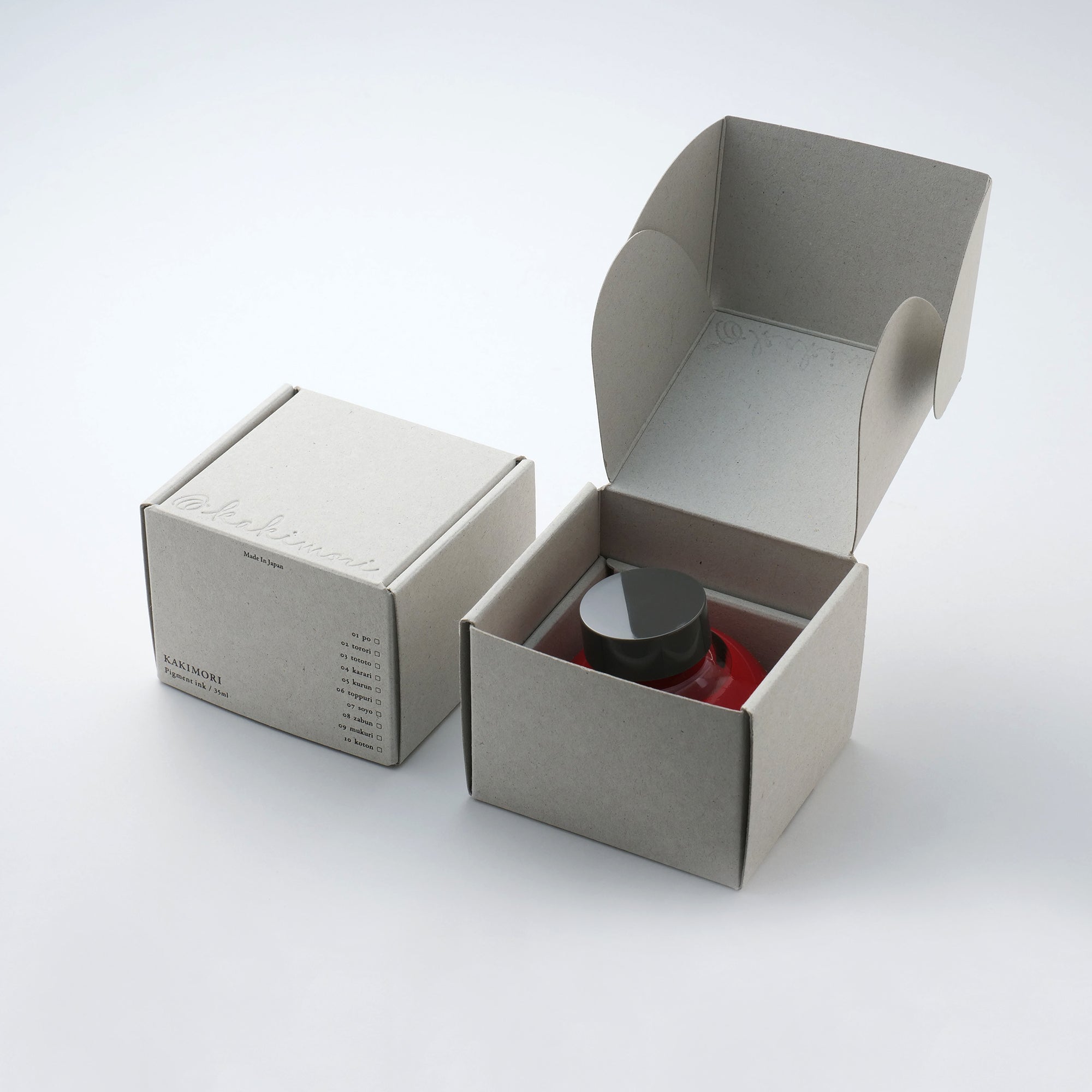
A charming little globe of colour, ready to spill tales onto paper. Designed by Makoto Koizumi and made in Japan, the Kakimori Pigment Ink bottle is equal parts desk ornament and daily essential. Its pleasingly squat, spherical form isn’t just delightful to behold—it’s built for balance and ease when dipping or refilling. And the colours? Each one is a poetic journey, named after onomatopoeic Japanese expressions that evoke everything from a quiet evening sky to the fizz of a shared drink.
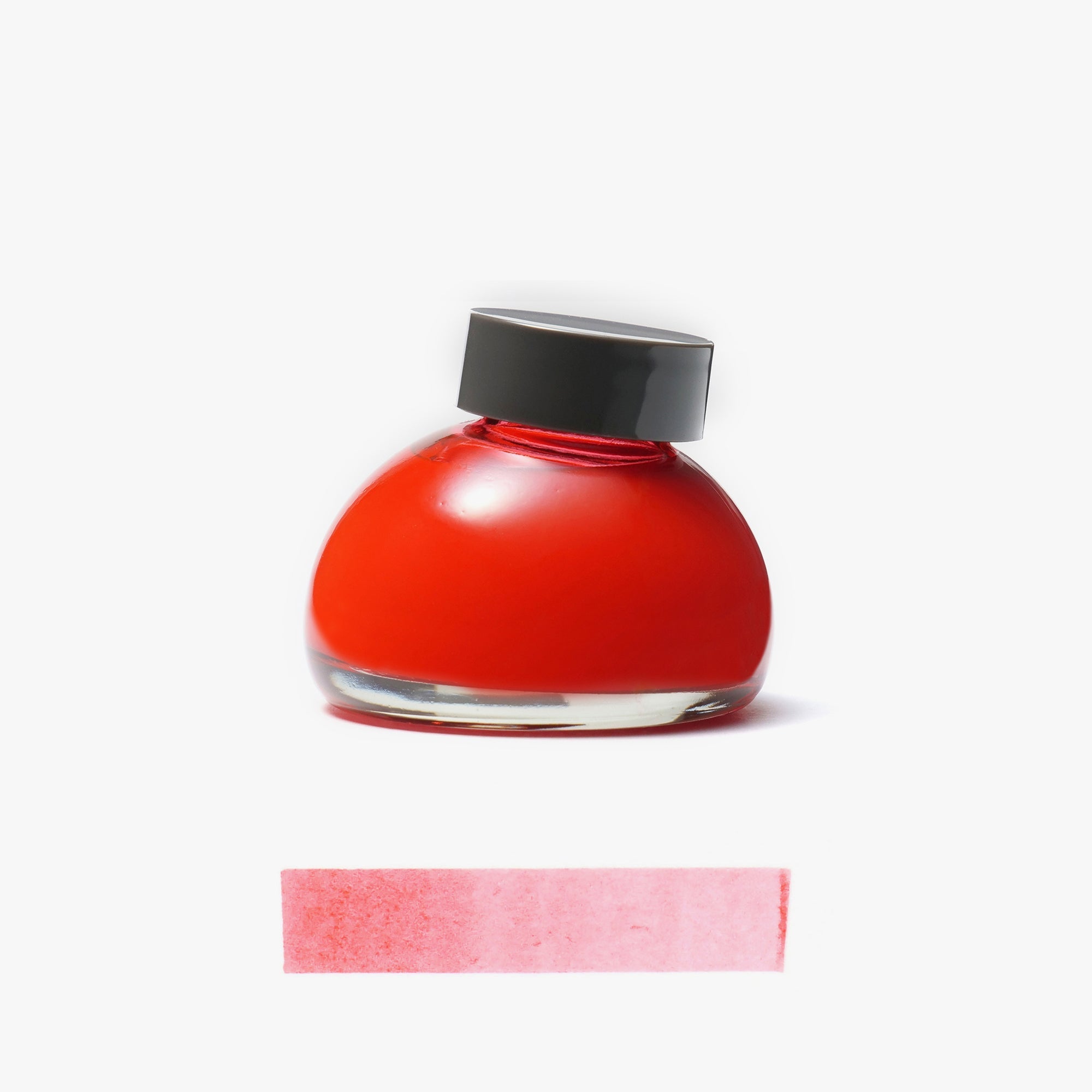
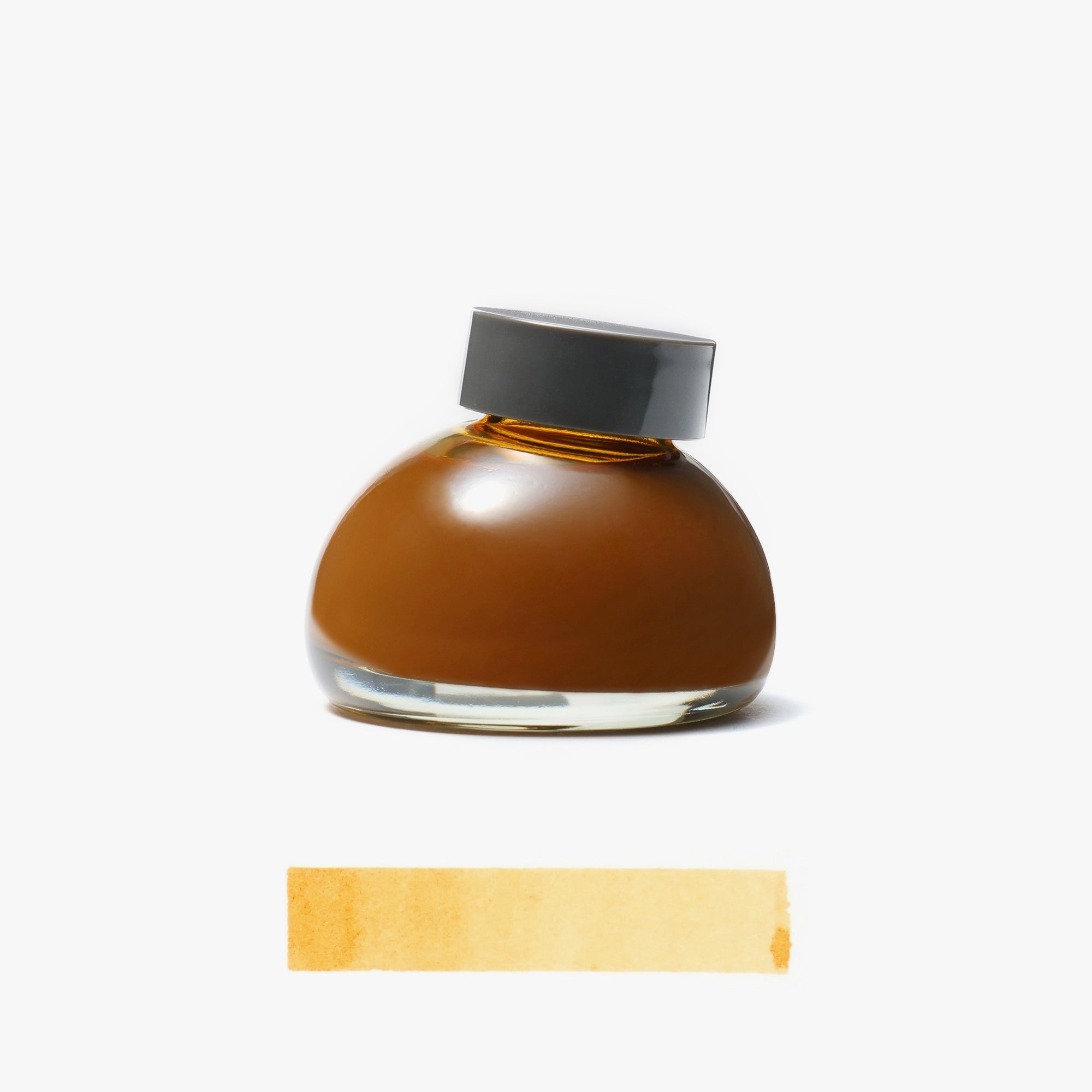
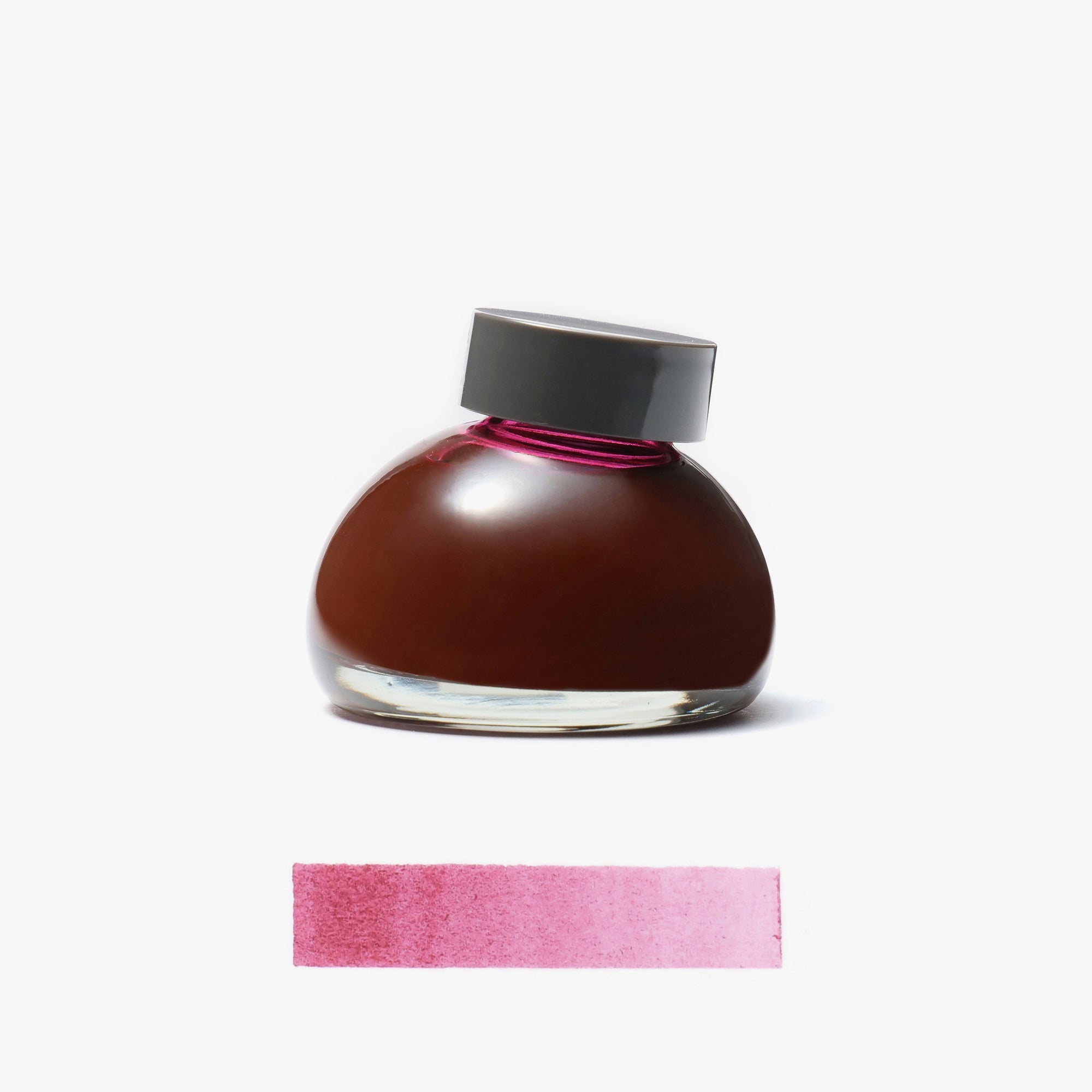
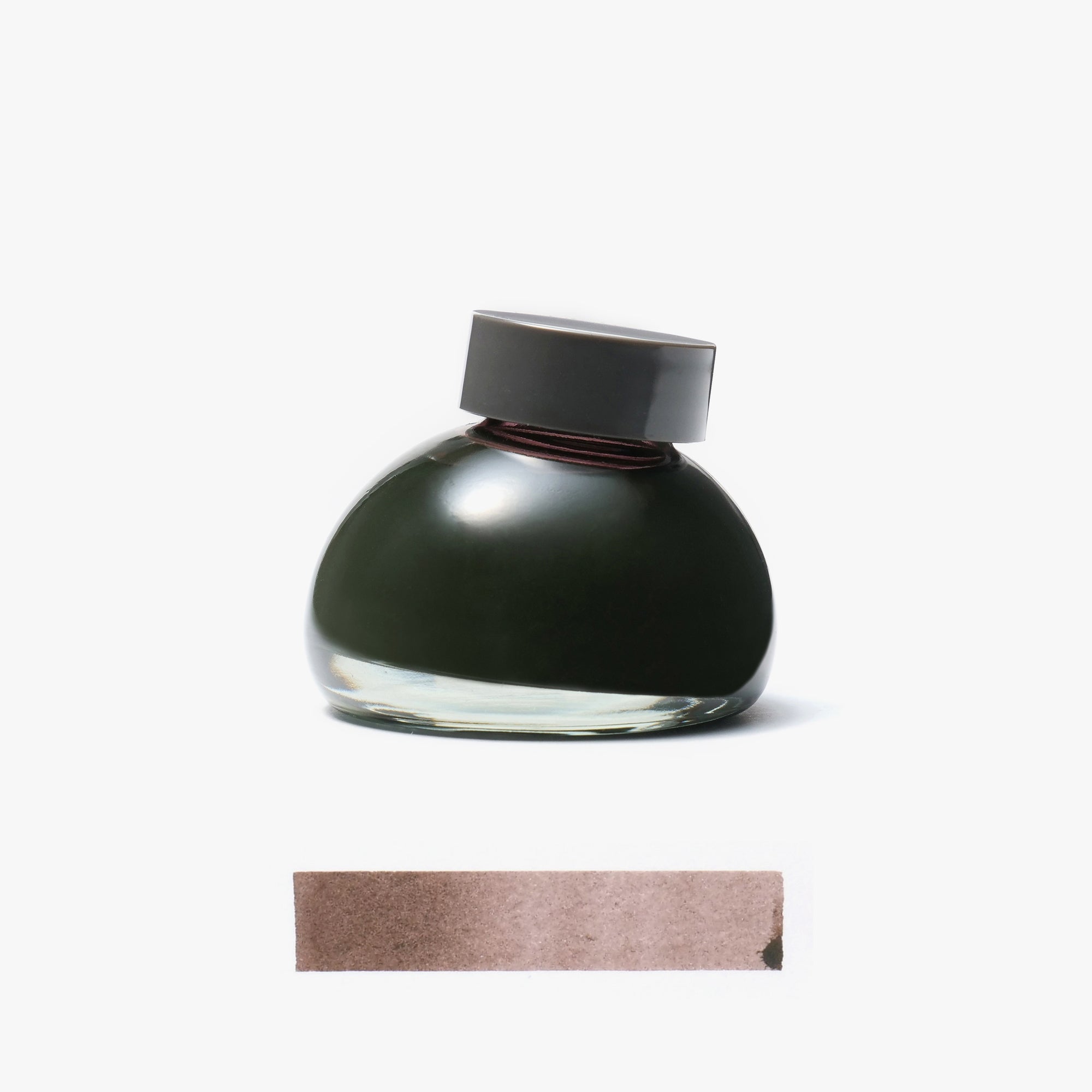
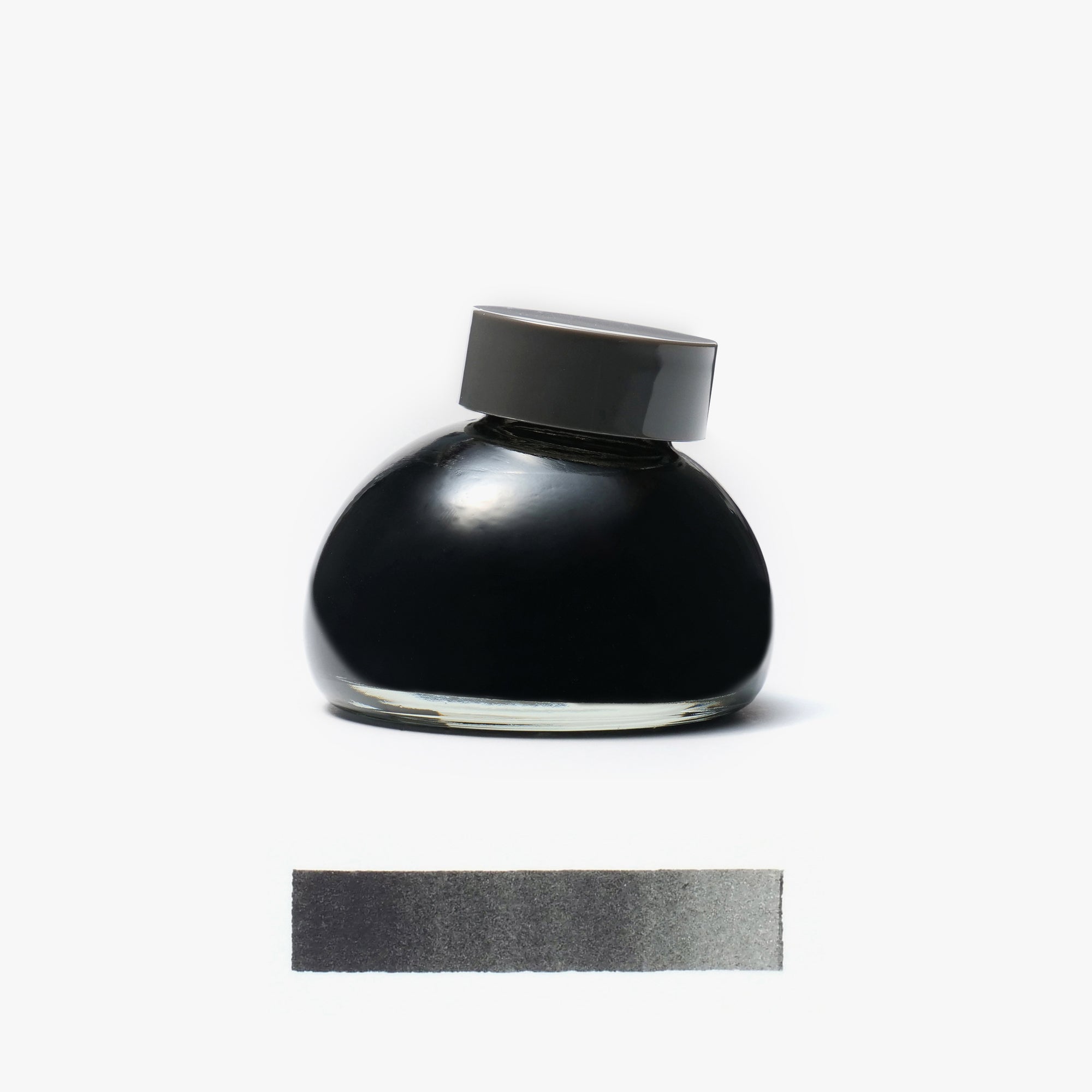
Each shade comes with its own quiet story. Po is a tender blush, the colour of shy affection. Torori recalls a creamy yolk, rich and golden. Tototo hums like rosé poured with care. Karari is your endlessly blue sky in ink form, while Kurun spirals with leafy green calm. For depth, there’s Toppuri, a soft navy that whispers of starlit nights, and Soyo, a breeze caught on the page. Zabun crashes in with deep-sea blue, Mukuri stirs with earthy warmth, and Koton lands softly—a near-black for contemplative writing. Together, they form a palette of moods and moments, each ready to flow from nib to narrative.
Small Details, Big Difference
• Built for Daily Use: With a 35ml volume and sturdy, balanced design, it’s ideal for everyday fountain or dip pen writing.
• Colourful Characters: Ten original hues inspired by Japanese sound imagery—each with its own story, each a joy to write with.
• Pigment-Based Brilliance: Fade, water, and smudge resistant. Because ink should linger in memory, not on your sleeves.
A charming little globe of colour, ready to spill tales onto paper. Designed by Makoto Koizumi and made in Japan, the Kakimori Pigment Ink bottle is equal parts desk ornament and daily essential. Its pleasingly squat, spherical form isn’t just delightful to behold—it’s built for balance and ease when dipping or refilling. And the colours? Each one is a poetic journey, named after onomatopoeic Japanese expressions that evoke everything from a quiet evening sky to the fizz of a shared drink.
Each shade comes with its own quiet story. Po is a tender blush, the colour of shy affection. Torori recalls a creamy yolk, rich and golden. Tototo hums like rosé poured with care. Karari is your endlessly blue sky in ink form, while Kurun spirals with leafy green calm. For depth, there’s Toppuri, a soft navy that whispers of starlit nights, and Soyo, a breeze caught on the page. Zabun crashes in with deep-sea blue, Mukuri stirs with earthy warmth, and Koton lands softly—a near-black for contemplative writing. Together, they form a palette of moods and moments, each ready to flow from nib to narrative.
Small Details, Big Difference
• Built for Daily Use: With a 35ml volume and sturdy, balanced design, it’s ideal for everyday fountain or dip pen writing.
• Colourful Characters: Ten original hues inspired by Japanese sound imagery—each with its own story, each a joy to write with.
• Pigment-Based Brilliance: Fade, water, and smudge resistant. Because ink should linger in memory, not on your sleeves.
Delivery & Returns
| Orders £35+ | UK Royal Mail delivery within 5 days, Monday to Friday. Free on orders over £35. | FREE |
| Tracked Delivery 48 |
Royal Mail 48, tracked. Delivery within 48 hours, Monday to Friday. Tracking number provided. |
£3.99 |
| Tracked Delivery 24 |
Royal Mail 24, tracked. Delivery within 24 hours, Monday to Friday. Tracking number provided. |
£4.99 |
| Next Day Delivery | Delivery on the following working day on orders purchased before 12:00pm, 5 days a week. You'll receive a tracking number with updates about the progress of your order. Signature required. |
£7.99 |
| International Delivery |
Shipping costs are calculated automatically at the checkout when both the destination and delivery service are selected. |
Calculated at checkout |
| Customs & Import Charges | In some cases, customs and import duties may be charged as your parcel reaches its destination country. The Journal Shop has no control over these charges and we can't tell you what the cost would be, as they will vary from country to country. Any charges on a parcel must be paid by the person receiving the parcel. | To be paid by customer |
The Journal
Stalogy Notebooks: The Complete UK Guide (2026)
Stalogy is the best Japanese stationery brand most people haven't heard of. In a market dominated by Hobonichi's cult following and Traveler's Company's heritage, Stalogy sits quietly to one side and gets on with making one of the finest everyday notebooks you can buy.
This is everything you need to know about Stalogy — what they make, who they're for, and why we think they deserve considerably more attention than they get.
Who Makes Stalogy?
Stalogy is produced by Sonic Co., Ltd., a Japanese stationery manufacturer based in Osaka. Sonic is best known in Japan for functional stationery tools — pen cases, organisers, desk accessories — and Stalogy is their premium notebook line. The name is a portmanteau of "stationery" and "logy" (from the Greek for study/reasoning) — stationery taken seriously.
The Stalogy 365 Days Notebook
This is Stalogy's flagship product, and the reason their reputation has spread internationally. It is a perpetual undated diary — you start it whenever you like, and it provides one page per day for a full year. No month printed at the top. No year. You begin on page one the day you open it, and finish 365 days later.
The format is practical in a way that dated planners never quite achieve. No guilt over blank pages when life interrupts your journaling habit. No pressure to start on January 1st. No half-used diary to abandon in March.
Sizes
- B6 — approximately 128mm × 182mm. The most popular size. Fits in a coat pocket, sits comfortably on a desk. This is the size most people recommend as a starting point.
- A5 — approximately 148mm × 210mm. More generous writing space, better for those who write large or want more room for spread layouts and sketching.
- A6 — pocket-sized, for those who want the Stalogy system in its most portable form.
The Paper
Stalogy uses 80gsm paper with a subtle 5mm grid. It is smooth, cream-toned, and fountain pen friendly — produces good ink saturation with minimal bleed-through even with moderately wet inks. Dry times are faster than Tomoe River, making it more forgiving for quick writers and left-handers.
This is not paper that will produce the dramatic shading and sheening of Tomoe River, but it is excellent everyday paper that performs reliably with any writing instrument — fountain pen, ballpoint, gel pen, felt tip.
The Binding
The Stalogy lies completely flat when open. Both pages are equally accessible and equally comfortable to write on. For bullet journaling and spread-based layouts, this matters enormously. The binding is sewn, not glued, which contributes both to the flat-lie behaviour and to the notebook's durability.
The Design
Stalogy's aesthetic is restrained to the point of near-invisibility. The covers come in solid colours — Black, Red, Blue, Yellow — with minimal branding. The interior typography is clean and precise. There are no cutesy illustrations, no inspirational quotes, no visual noise. It is a tool designed to be used, not displayed.
For minimalists who find other notebooks too visually busy, Stalogy is almost perfectly calibrated.
How Does It Compare?
vs Hobonichi Techo: The Hobonichi has better paper (Tomoe River), a more developed cover ecosystem, and the annual ritual of a new edition. The Stalogy has more flexibility (undated, more sizes), faster dry times, and costs significantly less. For serious fountain pen users who want to show their inks at their best, Hobonichi wins. For daily writers who want the best everyday notebook, Stalogy is a compelling alternative.
vs Leuchtturm1917: The Stalogy is quieter in design, produces better results with fountain pens, and the undated format is genuinely more practical. Leuchtturm has a more developed ecosystem of accessories and colours. For fountain pen users, Stalogy is a straightforward upgrade.
vs Midori MD Notebook: The MD Notebook has exceptional paper and minimal design, but no planner structure. The Stalogy 365 adds a one-per-day structure with the same minimalist aesthetic. Different tools for different uses — many people own both.
Who Is Stalogy For?
Stalogy is for the writer who wants exceptional quality without premium pricing or brand cult overhead. It suits minimalists, bullet journalers, fountain pen users who don't need the full Tomoe River experience, and anyone tired of planners that assume they know when your year starts.
It is also, frankly, one of the best-value notebooks we stock. The quality-to-price ratio is exceptional.
Browse our full Stalogy collection and our wider Japanese stationery range. For a comparison of how Stalogy fits alongside other Japanese notebook brands, see our Japanese stationery brands guide.
Frequently Asked Questions
Is Stalogy paper good for fountain pens?
Yes — Stalogy's 80gsm paper handles fountain pens well across most nib sizes and ink types. It's more forgiving than Tomoe River (faster dry times, less smearing) while still producing good ink saturation and minimal bleed-through.
What size Stalogy should I get?
B6 for most people — it's the most versatile size, portable enough to carry but spacious enough for comfortable writing. A5 if you write large, use your notebook for spreads or sketching, or want more room for bullet journal layouts.
Is Stalogy the same as Hobonichi?
No — they're different products from different companies. Both are Japanese notebooks with excellent paper, but Hobonichi uses Tomoe River paper and has a fixed annual structure; Stalogy uses their own 80gsm paper and is perpetually undated. See our brands guide for a fuller comparison.
Where can I buy Stalogy notebooks in the UK?
The Journal Shop stocks the full Stalogy 365 Days range in all sizes and colours, all held in UK stock with free delivery over £35.
How to Start Bullet Journaling with Japanese Stationery
Bullet journaling and Japanese stationery were made for each other. The bujo community's love of beautiful notebooks, precise writing tools, and decorative tape has an obvious home in Japanese stationery — and the Japanese stationery world's love of thoughtful, functional design maps perfectly onto what bullet journaling tries to achieve.
If you're starting a bullet journal and you want to do it with the best possible materials, this is your guide.
Start with the Right Notebook
The notebook is the foundation. For bullet journaling, you need a few things: lay-flat binding (so both pages are equally usable), fountain pen friendly paper if you use liquid inks, a grid or dot grid layout for structure, and a size that suits your habits.
Best Bullet Journal Notebooks from Japan
Stalogy 365 Days Notebook — Our top recommendation for bullet journaling. The Stalogy is a perpetual undated notebook you start whenever you like — perfect for a bujo, which rarely follows a calendar year. The paper is fountain pen friendly, the grid is subtle and clean, the binding lies flat, and it's available in A5 and B6 sizes. It also costs significantly less than a Leuchtturm, which makes filling it and starting fresh feel less fraught.
Hobonichi Techo Cousin (A5) — If you want a structured daily bujo with exceptional paper, the Cousin gives you one full A5 page per day on Tomoe River paper. The monthly calendar spreads are clean. It's more structured than a pure bujo but many users love the blend of structure and free-form daily pages.
Midori MD Notebook (A5, Grid) — For a purist blank-grid bujo, the MD Notebook is hard to beat. Exceptional paper, flat-lie binding, minimal design that won't compete with what you're creating inside. The A5 grid format is ideal for classic bullet journal layouts.
Writing Tools
You don't need a fountain pen to bullet journal — many bujo users swear by fine-point gel pens for speed and precision. But if you do use a fountain pen, Japanese paper rewards you spectacularly.
Fine-nib fountain pens — A fine Japanese nib (where "fine" means considerably finer than European fine nibs) is ideal for bujo headers and detail work. Pilot and Platinum both make excellent fine-nib pens at accessible prices.
Zebra Mildliner — The most popular highlighter in the bujo community worldwide, for good reason. The dual tip gives a broad highlight stroke and a fine detail tip in one pen. The colour range is extraordinary — over 25 colours in pastel and fluorescent varieties. They're made in Japan and available exclusively at specialist stationery shops.
Kuretake brush pens — For brush lettering in headers and titles, Kuretake's Zig Clean Color Real Brush pens are the gold standard. They produce true brush strokes, the ink is water-based, and the colours are vivid without being garish.
Washi Tape
MT is the original washi tape maker, and for bujo use it's unmatched. The tape tears cleanly, repositions without damaging paper, and writes on cleanly with any pen — useful for labels, dividers, and decoration.
The MT Basic Colours set is the essential starting point — a range of neutral and accent tones that work in any layout. From there, MT's pattern and illustration tapes open a rabbit hole that most bujo users happily disappear down.
Midori also produces decorative tapes and stamps that are ideal for bujo embellishment — their rubber stamp sets in particular add beautiful detail to spreads without requiring artistic skill.
A Simple Starting Setup
If you're starting from scratch, you don't need everything at once. Begin with:
- A Stalogy 365 Days Notebook (B6 for portability, A5 for more space)
- One fine-point pen you already love writing with
- One set of MT Basic washi tape
- One Zebra Mildliner in a colour you like
That's it. The most elaborate bujo spreads you've seen on Instagram were built up over months and years, not started that way. Begin simply, add what genuinely improves your system, and ignore the rest.
Browse our full Japanese stationery collection and see our Japanese stationery brands guide for deeper reading on the brands behind the tools.
Frequently Asked Questions
What is the best notebook for bullet journaling?
For pure flexibility, the Stalogy 365 Days is our top recommendation — undated, excellent paper, flat-lie binding, available in grid format. For those who want more daily structure, the Hobonichi Techo Cousin is superb. For a clean grid with no planner structure, the Midori MD Notebook A5 Grid is excellent.
Is Tomoe River paper good for bullet journaling?
Yes, with one caveat: its slow dry time can cause smearing if your hand drags across fresh ink while writing quickly. For careful writers or fountain pen users who write deliberately, it's wonderful. For fast writers who use gel pens, a slightly faster-absorbing paper like Stalogy or MD Paper may suit better.
What washi tape should I buy for bullet journaling?
Start with the MT Basic Colours set — neutral tones, solid colours, versatile for any layout. Add pattern tapes once you know what styles you gravitate towards. Avoid buying lots of tapes before you've established a style — most bujo enthusiasts have unopened tapes from impulse purchases they never used.
Do I need expensive tools to bullet journal?
No. A Stalogy notebook and whatever pen you already write with is enough to start. Japanese stationery rewards investment over time — but the investment should follow actual use, not precede it.
The Best Japanese Stationery Gifts for Every Budget (2026)
Japanese stationery makes exceptional gifts for a very specific reason: it looks and feels premium without necessarily costing a premium amount. The design sensibility — precise, thoughtful, beautiful in use rather than in display — translates immediately even to people who don't know anything about stationery brands.
We've curated gifts across every budget, from a first-time MT washi tape haul to a Sailor fountain pen set that will genuinely last a lifetime.
Under £15 — Perfect Starter Gifts
MT Masking Tape Set
MT is the original washi tape maker, and a set of MT tapes is one of the most reliably delightful small gifts in stationery. The MT Basic Colours set gives a range of everyday tones; the pattern and illustration sets go further. They're beautiful, practical, and entirely new to most gift recipients. Expect immediate questions about where they came from.
Who it's for: Journalers, bullet journalers, gift wrappers, anyone who decorates planners or notebooks.
Stalogy Notebook
The Stalogy 365 Days notebook is an elegant, understated gift for anyone who writes. Clean design, excellent paper, flat-lie binding. The kind of notebook that feels more expensive than it is — which, for a gift, is exactly the point.
Who it's for: Writers, journalers, minimalists, anyone starting a new notebook habit.
Pilot Iroshizuku Ink
A single bottle of Pilot Iroshizuku is a perfect gift for any fountain pen user who hasn't tried it. The bottles are beautiful objects in themselves. Pick a colour that suits the recipient — Tsuki-yo for teal lovers, Kon-peki for blue, Yama-budo for something more dramatic.
Who it's for: Fountain pen users of any level.
£15–40 — Considered Gifts
Midori MD Notebook
The Midori MD Notebook is a gift that communicates taste. Minimal cover, exceptional paper, flat-lie binding. Available in A4, A5, A6 and B6 sizes, in blank, lined, and grid. A gift for the writer who already has notebooks but will immediately recognise this one as better.
Who it's for: Writers, fountain pen users, designers, anyone who takes their paper seriously.
Traveler's Company Brass Accessories
Midori's brass accessories — paper clips, bone folders, letter openers — are objects that reward daily use. They're heavy, beautifully made, and the kind of thing people never buy for themselves. Particularly good as a gift alongside a Traveler's Notebook.
Who it's for: Anyone who appreciates craft objects and desk accessories.
Hobonichi Techo Original
The Hobonichi Techo Original with a simple cover makes a beautiful gift for a daily journaler or planner. At around £25–30 for the notebook, it's an accessible entry point to the Hobonichi world. If the recipient is already a Hobonichi user, buy them a new cover instead.
Who it's for: Daily journalers, planner enthusiasts, anyone who already loves Japanese stationery.
£40–80 — Luxury Gifts
Traveler's Notebook Starter Kit
The Traveler's Notebook starter kit — leather cover plus refills — is one of the finest gifts in stationery at any price point. It arrives beautifully packaged, feels luxurious to unwrap, and lasts decades. Available in Regular and Passport sizes, in Camel, Black, and Brown leather.
Who it's for: Travellers, writers, people who want a notebook system they can make their own. An excellent gift for someone who "has everything" in the stationery world — they probably don't have a Traveler's Notebook.
Sailor Pro Gear Slim Fountain Pen
A Sailor fountain pen is a gift that will be used for decades. The Pro Gear Slim is Sailor's most elegant everyday pen — slim, beautifully balanced, with a 14-karat gold nib that writes with extraordinary smoothness. Pair it with a bottle of Sailor Shikiori ink for a complete gift.
Who it's for: Fountain pen enthusiasts, writers, anyone who would appreciate a genuinely lifetime pen.
Gift Wrapping and Presentation
Japanese stationery gifts present beautifully with minimal effort. MT washi tape on plain kraft wrapping paper is itself a statement. A Traveler's Notebook arrived in its original packaging needs no additional wrapping — the packaging is part of the gift.
Browse our full Japanese stationery collection — all UK stock, free delivery over £35. Not sure where to start? Our Japanese stationery brands guide will help.
Frequently Asked Questions
What is a good Japanese stationery gift for someone who doesn't know stationery?
MT washi tape is the safest entry-level Japanese stationery gift — it's immediately beautiful, obviously Japanese in design, and has clear practical uses. A Stalogy or MD Paper notebook is another safe bet for anyone who writes at all.
Is a Hobonichi a good gift?
Yes, with one caveat: the recipient should be a daily journaler or planner user who would use one page per day. If they're an occasional writer, the Traveler's Notebook is a more flexible choice.
Do you offer gift wrapping at The Journal Shop?
All Journal Shop orders are carefully packaged. Japanese stationery arrives in its original packaging, which is often beautiful enough to serve as gift presentation itself.
What is the best Japanese stationery gift under £20?
A bottle of Pilot Iroshizuku ink (for fountain pen users), an MT washi tape set (for journalers and crafters), or a Stalogy notebook (for writers) are all excellent options under £20.


